
 By Rightful Advice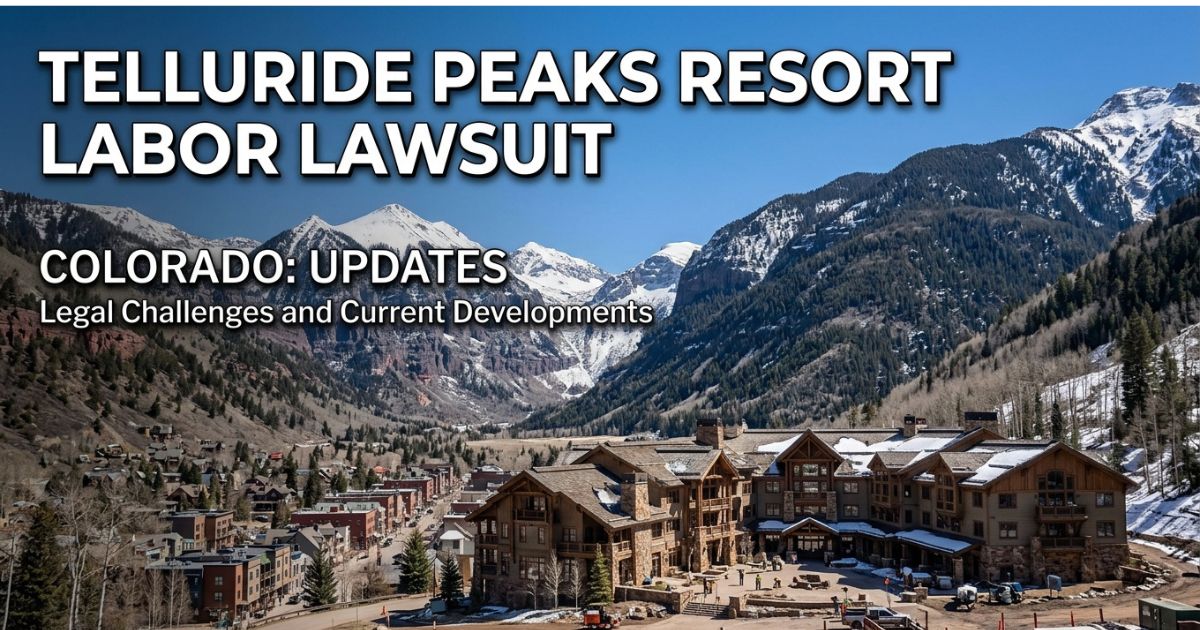
A wage-and-hour lawsuit filed against Telluride Peaks Resort (the Peaks Resort & Spa) in Telluride, Colorado alleges that housekeeping staff were systematically denied overtime pay required under Colorado law, with litigation now centered on who legally counts as the workers’ employer. The case matters because it tests how Colorado’s overtime rules apply in resort-hotel settings that use third‑party staffing companies and H‑2B guestworkers, and it could affect how similar properties structure housekeeping contracts going forward.
This article explains the legal issues, summarizes the latest court developments, and outlines who is affected and what to watch next. It is for informational purposes only and does not constitute legal advice.
Background & Legal Context
The property and the workforce
The Peaks Resort & Spa is a four‑star hotel in Telluride that relies heavily on housekeeping staff to turn rooms during high‑season peaks. According to reporting on the lawsuit, at least one housekeeper described working extremely long shifts (for example, 15 hours a day, seven days a week) during busy periods.
The workers at issue were employed through a staffing company that recruited them, handled visas (including H‑2B guestworker sponsorship in some instances), paid wages, and maintained employment records, while the hotel contracted with that company to provide cleaning services. This contractor-plus-hotel model is common in mountain resort towns, where seasonal demand and housing constraints push operators toward third‑party labor suppliers.
The core legal claim: unpaid overtime under Colorado law
Colorado’s wage-and-hour framework requires overtime pay for hours worked beyond statutory thresholds (generally over 40 hours in a workweek, and in some cases over 12 hours in a day or 12 consecutive hours), unless a specific exemption applies. The lawsuit alleges that the arrangement used at the Peaks allowed the resort to avoid paying all the overtime that housekeepers were owed under Colorado wage-and-hour laws.
In practical terms, plaintiffs argue that even though a staffing company issued paychecks, the hotel’s control over scheduling, assignments, and daily supervision means it should be treated as a joint employer and therefore share liability for unpaid overtime.
Why joint employer status is the pivot point
Under both the federal Fair Labor Standards Act (FLSA) and Colorado wage law, liability for unpaid wages turns on who qualifies as an employer. When workers are supplied by a contractor, courts often apply a multi‑factor test to decide whether the client company (here, the hotel/resort operator) is a joint employer.
Key factors typically include whether the alleged joint employer:
- Has the power to hire or fire the workers
- Controls wages and payroll
- Maintains employment records
- Supervises and disciplines workers
- Sets schedules and working conditions in a way that amounts to co‑determining essential terms of employment
The Telluride case has become a useful reference point because a federal magistrate judge recently issued a detailed report and recommendation analyzing these exact questions in a closely related matter involving housekeepers at a Telluride resort property.
Key Legal Issues Explained
Joint employer tests in the Tenth Circuit and Colorado
The Tenth Circuit (which covers Colorado) has not adopted a single rigid test for joint employment. Instead, courts look at the economic realities of the relationship and borrow from frameworks such as the Ninth Circuit’s Bonnette factors and the Fourth Circuit’s Hall‑Salinas approach.
In Gonzalez Velez v. Telluride Resort Partners, LLC, a U.S. District Court magistrate judge in Colorado recommended granting summary judgment in favor of a hotel operator, concluding it was not a joint employer of housekeepers supplied by a third‑party contractor. The court emphasized that the most important factor is the right to terminate the employment relationship.
Operational control vs. employment control
A critical distinction in these cases is between:
- Operational control: Assigning daily tasks, setting on‑site schedules, providing tools, and monitoring quality.
- Employment control: Hiring, firing, setting pay rates, running payroll, maintaining personnel files, and imposing discipline that can end the job.
In the Telluride hotel case, the court found that while the hotel directed day‑to‑day work and could request that a worker be removed from the property, it did not have authority to fire workers, set their wages, or maintain their employment records. Those functions remained with the staffing company. The court treated that division of authority as decisive, reasoning that quality‑assurance oversight does not, by itself, create joint employer liability.
What plaintiffs must show to succeed
To hold the hotel/resort operator liable, plaintiffs generally must show that the hotel co‑determined the essential terms and conditions of employment, not just that it supervised the work. Evidence that can matter includes:
- Who actually hired the workers and signed employment paperwork
- Who set hourly rates and approved raises
- Who processed payroll and paid overtime
- Who could terminate employment versus who could only request reassignment
- Who maintained personnel files and handled disciplinary actions that could lead to termination
If the staffing company retains those core functions, courts are less likely to find joint employer status, even when the hotel closely manages daily operations.
Latest Developments or Case Status
Federal court ruling in a related Telluride hotel housekeeper case
In early 2026, Magistrate Judge Cyrus Y. Chung of the U.S. District Court for the District of Colorado issued a report and recommendation in Gonzalez Velez v. Telluride Resort Partners, LLC, recommending summary judgment for the hotel operator on joint employer claims. The ruling is significant for the broader Telluride Peaks Resort Colorado Labor Lawsuit landscape because it clarifies how Colorado federal courts are likely to analyze similar facts involving resort hotels, staffing companies, and H‑2B workers.
The court concluded that no reasonable jury could find a joint employment relationship because the hotel lacked authority to hire, fire, pay, or maintain employment records for the housekeepers. While the hotel assigned work and monitored performance, those actions were treated as contractual quality control, not employment control.
Class action allegations and media reporting on Peaks Resort
Separately, local and state media have reported that Telluride Ski & Golf (the entity associated with the Peaks Resort & Spa and the broader ski area) was named in a class action lawsuit alleging wage theft and labor law violations, with at least one plaintiff described as a housekeeper at the Peaks Hotel between 2021 and 2023. Reporting indicates the suit alleges the structure allowed the resort to avoid paying all overtime owed under Colorado law.
Public filings and detailed pleadings for that specific class action have not been fully summarized in widely available secondary sources, and parties have at times stated they had not yet received the complaint when approached by media. As a result, the precise procedural status (for example, whether it is pending in state or federal court, whether any motions have been decided, or whether a settlement has been reached) is not fully documented in publicly accessible reporting as of late 2026.
Related wage disputes in the same ecosystem
The Peaks/Telluride labor litigation sits alongside other high‑profile disputes in the area. For example, the Telluride ski patrol union struck in late 2025 and early 2026 over wages and retention, shutting the mountain during the holiday season before a new contract was ratified in January 2026. In addition, a 2023 lawsuit by a ski school worker alleging more than $110,000 in owed wages settled in 2024, and a 2023 housekeeper class action against another local hotel and its cleaning contractor settled in 2024 for $400,000.
These neighboring cases help explain why wage‑and‑hour compliance in Telluride’s hospitality sector is under heightened scrutiny, even though each case turns on its own facts and legal theories.
Who Is Affected & Potential Impact
Directly affected workers
The primary group affected by the Telluride Peaks Resort Colorado Labor Lawsuit includes:
- Current and former housekeepers at the Peaks Resort & Spa who worked long hours during peak seasons, particularly between 2021 and 2023 as referenced in reporting.
- Potentially other hotel or resort workers in similar staffing arrangements if the legal reasoning in Gonzalez Velez is extended or distinguished in future cases.
If plaintiffs in any given case can prove joint employer status, affected workers could be entitled to back overtime, liquidated damages, and attorneys’ fees under applicable statutes.
Resort operators and hotel owners
For resort and hotel operators in Colorado, the key takeaway is that using a third‑party staffing company does not automatically shield them from wage‑and‑hour liability. Courts will look behind the contract to see who actually controls hiring, firing, pay, and records.
At the same time, the Gonzalez Velez decision offers a roadmap for reducing joint employer risk by:
- Keeping hiring, firing, and payroll decisions with the staffing company
- Avoiding direct discipline that could amount to termination
- Ensuring the contractor maintains employment records and handles HR functions
- Structuring removal requests as reassignment rather than termination
Staffing companies and labor contractors
Staffing firms that supply housekeepers and other seasonal workers face direct liability as the formal employer if overtime was not properly calculated and paid. The Telluride litigation environment, including the 2024 settlement in a separate housekeeper case, signals that contractors must be especially careful with timekeeping, overtime calculations, and compliance with Colorado’s daily and weekly overtime rules.
Local economy and compliance culture
Telluride’s high cost of living and dependence on seasonal labor make wage compliance both economically sensitive and legally risky. Repeated wage‑and‑hour suits and settlements in the area increase pressure on operators to audit payroll practices, review contractor agreements, and ensure that scheduling does not inadvertently create unpaid overtime exposure.
What This Means Going Forward
Legal significance of the Telluride hotel joint employer ruling
The Gonzalez Velez report and recommendation is likely to be cited by defense counsel in similar Colorado cases involving resort hotels, staffing companies, and H‑2B workers. Its emphasis on termination authority as the most important factor gives courts a concrete anchor when weighing operational control against employment control.
For plaintiffs’ attorneys, the decision underscores the need to gather detailed evidence about who actually hires, fires, pays, and disciplines workers, rather than relying solely on the fact that the hotel directed daily tasks.
Practical steps for businesses and workers
For resort and hotel operators:
- Review housekeeping and other labor contracts to confirm who holds hiring, firing, payroll, and record‑keeping authority.
- Train supervisors to route discipline and termination decisions through the staffing company.
- Audit timekeeping to ensure overtime is correctly calculated under Colorado’s rules.
For workers who believe they were denied overtime:
- Preserve pay stubs, time records, schedules, and any communications about hours worked.
- Consult a Colorado wage‑and‑hour attorney to evaluate whether the facts support a joint employer theory or a claim against the staffing company.
- Be mindful of statutes of limitations, which can limit how far back unpaid wages can be recovered.
What to monitor
Key developments to watch in the Telluride Peaks Resort Colorado Labor Lawsuit and related matters include:
- Any published orders or judgments in the specific class action alleging wage theft at the Peaks Resort & Spa.
- Whether the Gonzalez Velez magistrate recommendation is adopted by the district judge and whether it is appealed.
- Additional wage‑and‑hour filings against Telluride‑area hotels and resorts, which could refine how courts apply joint employer tests in mountain resort contexts.
Frequently Asked Questions
What is the Telluride Peaks Resort Colorado Labor Lawsuit about?
It is a wage‑and‑hour case alleging that housekeepers at the Peaks Resort & Spa in Telluride were not paid all overtime required under Colorado law, with litigation focusing on whether the resort hotel is a joint employer alongside the staffing company that formally employed the workers.
Who are the plaintiffs in the Telluride Peaks labor case?
Reporting describes at least one plaintiff as a former housekeeper at the Peaks Hotel who worked there between 2021 and 2023, with the suit characterized in media as a class action on behalf of similarly situated workers.
What legal theory do workers rely on?
Workers rely on Colorado wage‑and‑hour statutes (and often parallel federal FLSA theories) and argue that the hotel should be treated as a joint employer because it controlled scheduling, assignments, and daily supervision, even if a staffing company issued paychecks.
Has a court already ruled on joint employer status in a Telluride hotel case?
Yes. In Gonzalez Velez v. Telluride Resort Partners, LLC, a federal magistrate judge in Colorado recommended summary judgment for a hotel operator, finding it was not a joint employer of housekeepers supplied by a third‑party contractor because it lacked authority to hire, fire, pay, or maintain employment records.
Does this mean all Telluride hotel housekeeper claims will fail?
No. The Gonzalez Velez ruling is fact‑specific and, as a magistrate’s report and recommendation, may still be subject to review by the district judge and potential appeal. Other cases with different contractual or operational facts could reach different outcomes.
What should affected workers do now?
Workers who believe they were denied overtime should gather documentation (pay stubs, schedules, time records) and consult a Colorado employment attorney to assess potential claims against the staffing company, the hotel, or both, while paying attention to filing deadlines.
Conclusion
The Telluride Peaks Resort Colorado Labor Lawsuit brings Colorado’s overtime rules into sharp focus for resort hotels that use third‑party staffing companies and guestworker programs. Recent federal court analysis in a related Telluride housekeeper case suggests that, without control over hiring, firing, pay, and employment records, a hotel may avoid joint employer liability even when it closely manages daily work. At the same time, repeated wage‑and‑hour disputes in the Telluride area signal that operators and contractors must carefully structure their relationships and payroll practices to comply with state law.
This article is for informational purposes only and does not constitute legal advice. Readers with potential claims or compliance questions should consult a qualified Colorado employment attorney.
You may also like: Advance Financial 24 7 Lawsuit Updates & Settlement Info