
 By Rightful Advice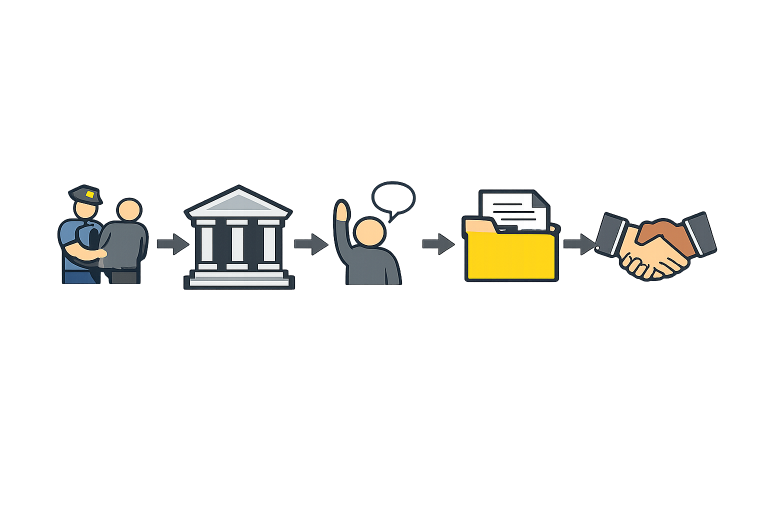
Facing arrest can be overwhelming, but understanding the criminal defense process from the moment of arrest through trial is essential for anyone charged with a crime. Immediate steps taken after an arrest can profoundly impact the outcome of your case. Legal professionals, like those at martinlawfirmpc.com, recommend learning what to expect during every phase of this process, so you can make informed decisions that protect your rights and freedom.
Every stage, from being detained by law enforcement to standing before a judge at trial, involves procedures that you need to understand to work effectively with your attorney. Navigating these steps with awareness can help you avoid missteps and take advantage of opportunities to strengthen your defense. Early intervention by a qualified criminal defense lawyer is often crucial in shaping a favorable outcome. This guide is designed to clarify each major step in Pennsylvania’s criminal defense process, from arrest and booking through the final verdict.
Your rights under the U.S. Constitution, including the right to remain silent and the right to legal counsel, must be asserted as early as possible. Protecting yourself begins with understanding what law enforcement can and cannot do, and what procedures legally must be followed by all parties involved.
Arrests usually happen suddenly, leaving you little time to prepare or gather your thoughts. However, an early understanding of the following steps will ensure you do not inadvertently jeopardize your case or waive critical rights in the heat of the moment. Be aware of local processes, as criminal procedures may vary slightly by state. If you are unfamiliar with this process, you can also review guidance from resources such as the Nolo Legal Encyclopedia.
Arrest and Booking
When someone is arrested, law enforcement must have probable cause to believe a crime was committed. The arrest process generally begins with being taken into custody, searched for weapons, and transported to a police station for booking. Booking involves recording the suspect’s personal information, photographing, fingerprinting, and inventorying personal property. Defendants should exercise their right to remain silent and request an attorney before answering any questions. Anything said during this stage may be used against them later in court.
The Initial Hearing and Bail
After booking, the accused will have an initial appearance before a judge, often within 48 hours of arrest. During this hearing, the charges are formally read, and the judge determines whether the accused should be granted bail and, if so, under what conditions. Bail allows defendants to be released from custody while awaiting trial, provided they agree to return for future court dates. If bail is denied or set at an unreasonably high amount, defense attorneys can file motions for reconsideration. Understanding your options at this juncture can significantly impact your ability to continue daily life while awaiting trial. For more on pretrial detention and bail, see this Time Magazine overview.
Arraignment and Entering a Plea
The arraignment is a key stage where the accused is officially charged and asked to enter a plea, typically “guilty,” “not guilty,” or “no contest.” This hearing is also an opportunity for the defense attorney to address pretrial release conditions. A “not guilty” plea leads to the scheduling of future court events, while a guilty plea may move the case directly to sentencing. Defendants should consult with their attorney about plea options and potential ramifications before entering any plea.
Pretrial Motions and Discovery
In the weeks or months after arraignment, both sides engage in discovery, which involves exchanging evidence and information. Defense attorneys might file a variety of pretrial motions, such as motions to suppress evidence, dismiss charges, or compel the prosecution to produce specific documents. These motions play an essential role in shaping what may be presented at trial and can even lead to charges being dropped if successful. Ongoing communication with your attorney is vital during this stage, as strategic legal filings can significantly alter the course of the case.
Plea Bargaining
Plea bargaining is a process in which the defense and prosecution negotiate possible agreements to resolve the case without going to trial. Plea deals can result in reduced charges, lighter sentences, or other favorable terms. Most criminal cases in Pennsylvania (and across the U.S.) are resolved through plea agreements before ever reaching trial. Your attorney will evaluate the strength of the case, available evidence, and likely trial outcomes to help determine whether a plea is in your best interest or whether it is better to proceed to trial.
The Criminal Trial
If no agreement is reached through plea bargaining, the case will go to trial. Trials begin with jury selection, followed by opening statements, the presentation of evidence and witnesses, cross-examination, and closing arguments. The prosecution must prove guilt “beyond a reasonable doubt,” while the defense works to undermine the government’s case and assert reasonable doubt. If found not guilty, the accused is free to go. If found guilty, sentencing is scheduled. Every trial stage comes with complex rules and procedures, which is why an experienced defense attorney is indispensable at this point.
Protecting Your Rights Throughout
From the initial arrest to the final trial verdict, every stage of the criminal defense process carries unique risks and opportunities. The right legal strategy, formulated with the help of a skilled criminal defense attorney, can help ensure your rights are upheld and that you are treated fairly within the legal system. Familiarity with each step, proactive communication with your lawyer, and careful decision-making are the cornerstones of a solid defense.
Staying informed, prepared, and engaged throughout the process empowers you to make decisions that can greatly influence the outcome of your case and your future.