
 By Rightful Advice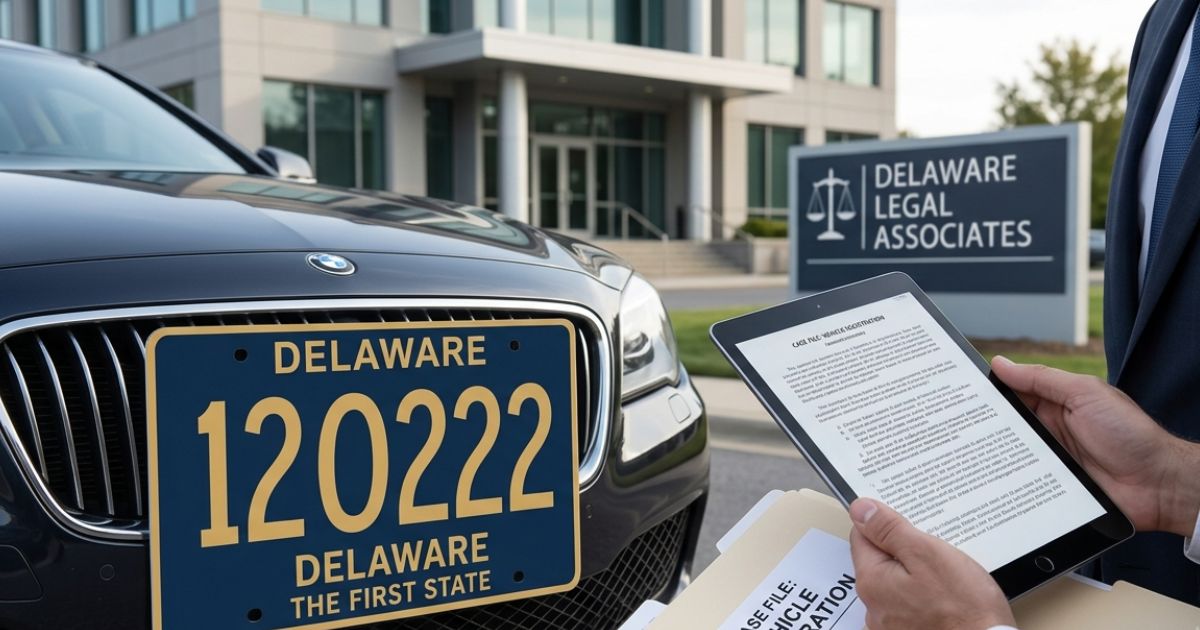
Delaware license plates serve as official state-issued identifiers required for all registered motor vehicles operating on public roads. The Delaware Division of Motor Vehicles (DMV), under the Delaware Department of Transportation (DelDOT), administers the issuance, renewal, and regulation of these plates pursuant to state statutes governing vehicle registration and titling.
This article provides a factual overview of the processes for obtaining, renewing, and understanding associated fees for Delaware license plates. It draws on official DMV procedures and regulatory requirements. This article is for informational purposes only and does not constitute legal advice. Readers should consult the Delaware DMV or a qualified professional for advice specific to their situation.
Background & Legal Context
Delaware vehicle registration laws establish mandatory requirements for titling and registering motor vehicles, including the display of valid license plates. These rules stem from statutes designed to ensure public safety, facilitate law enforcement identification, support road maintenance funding through fees, and comply with insurance mandates.
The framework balances administrative efficiency with consumer obligations. Standard passenger vehicle registrations for vehicles weighing 5,000 pounds or less carry a base annual fee. Additional surcharges apply for alternative fuel vehicles (such as electric, hybrid, and others) to account for their impact on infrastructure funding, reflecting legislative adjustments to maintain revenue neutrality as vehicle technology evolves.
Recent regulatory updates, effective October 1, 2025, introduced fee adjustments, including increases to certain document fees and new charges for specialty plate creation by organizations. These changes reflect ongoing legislative efforts to address administrative costs and program sustainability.
Key Processes Explained
Ordering a Delaware License Plate
New residents must register vehicles within 60 days of establishing residency. Buyers of new or used vehicles generally have 30 days to complete registration after purchase.
Required documentation typically includes:
- Proof of Delaware liability insurance.
- Completed title application (if applicable).
- Bill of sale or signed title.
- Passing safety inspection (where required).
- Payment of applicable fees.
Standard plates are issued upon initial registration. For duplicate plates (due to loss, damage, or theft), applicants must visit a DMV office with proof of insurance, current registration details, and pay the replacement fee. A temporary tag may be provided while a new plate is produced, which can take 6-8 weeks.
Vanity (personalized) plates and specialty plates follow additional approval processes. Vanity plates require submission of an application verifying availability and compliance with content restrictions (e.g., no offensive combinations). Specialty plates include background designs and organizational plates supporting specific causes or groups.
Renewing a Delaware License Plate (Vehicle Registration)
Registrations for most passenger vehicles renew annually. Renewal notices are sent via email or mail up to 90 days in advance to those enrolled in the notification program.
Key requirements for renewal:
- Valid Delaware liability insurance.
- Odometer reading.
- Passing safety inspection for eligible vehicles (newer model years may have exemptions).
- Payment of registration fees.
Renewals can often be completed online, by mail, or in person at DMV locations. A $20 late fee applies for renewals after expiration. Vehicles in the six newest model years weighing under 10,000 pounds generally do not require inspection for renewal.
Fees for Delaware License Plates
Base registration for passenger cars weighing 5,000 pounds or less is $40 per year. Commercial and heavier vehicles follow a tiered structure.
Common fees (subject to updates; verify with DMV for current rates):
- Standard registration renewal: $40 annually (base).
- Late renewal: Additional $20.
- Duplicate license plate with sticker: Specified replacement fee (typically modest; confirm current amount).
- Vanity plates: Annual surcharge in addition to base registration.
- Specialty plates (e.g., environmental, animal welfare, organizational): One-time initial fee, often $50 or as designated, with proceeds sometimes supporting the associated cause.
- Alternative fuel vehicle surcharges (effective as of recent updates): Vary by type (e.g., electric vehicles under 6,000 lbs GVWR: $110 annually; hybrids and others have scaled fees).
Additional costs may include title fees, document fees (increased to 5.25% effective October 2025 for titling), and validation stickers. A specialty license plate creation fee of $200 applies to organizations seeking new designs.
Fees are subject to change through legislative action. The DMV maintains a fee schedule and calculator for precise estimates.
Who Is Affected & Potential Impact
Vehicle owners in Delaware, including residents, new arrivals, and businesses, must comply with these requirements to legally operate vehicles. Non-compliance can result in registration suspension, fines, or inability to renew insurance or pass inspections.
Impacts extend to:
- Consumers: Understanding fees helps with budgeting, particularly with alternative fuel surcharges and potential late penalties.
- Organizations: Specialty plate programs allow advocacy and fundraising but involve application and production timelines.
- Dealers and military personnel: Specific provisions (e.g., temporary tags, military exemptions with orders) streamline processes for certain groups.
Timely renewal and proper documentation prevent disruptions in vehicle use and avoid additional costs.
What This Means Going Forward
Delaware’s license plate and registration system continues to evolve with technological and environmental considerations, such as alternative fuel adjustments. Vehicle owners should monitor DMV communications for updates on fees, inspection rules, or online service enhancements.
Staying informed through official channels supports compliance and helps avoid regulatory issues. As enforcement relies on visible, valid plates, proper maintenance of plates and registrations remains a core legal responsibility for operators.
Frequently Asked Questions
How do I order a new Delaware license plate?
Applicants typically complete the process during initial vehicle registration at a DMV office or through authorized channels, providing required documents and fees. Duplicates or replacements require an in-person visit with proof of ownership and insurance.
What are the renewal requirements for Delaware vehicle registration?
Submit proof of insurance, odometer reading, and passing inspection (if applicable), along with payment. Renew up to 90 days early to avoid lapses.
How much does a Delaware license plate cost?
Base annual registration is $40 for most passenger vehicles, with additional fees for vanity, specialty, or alternative fuel vehicles. Replacement and other service fees apply separately.
Can I get specialty or vanity Delaware license plates?
Yes. Organizational and background specialty plates have specific applications and one-time fees. Vanity plates require approval of the requested combination.
What happens if my Delaware license plate is lost or stolen?
Report the incident and order a duplicate or new plate at a DMV office. A temporary tag may be issued during production.
Are there extra fees for electric vehicles in Delaware? Yes. Annual surcharges apply based on vehicle weight and fuel type to support infrastructure.
Conclusion
Delaware license plate requirements form an essential part of the state’s vehicle regulatory framework, ensuring identification, safety, and funding for transportation services. By following official DMV procedures for ordering and renewal, and understanding applicable fees, vehicle owners fulfill their legal obligations efficiently.
For the most current information, visit the Delaware DMV website or contact a local office. Regulations and fees may change, so periodic verification supports ongoing compliance. This article is for informational purposes only and does not constitute legal advice.
You may also like: Selena Green Vargas Lawsuit: Latest Updates & Legal Outcomes