
 By Rightful Advice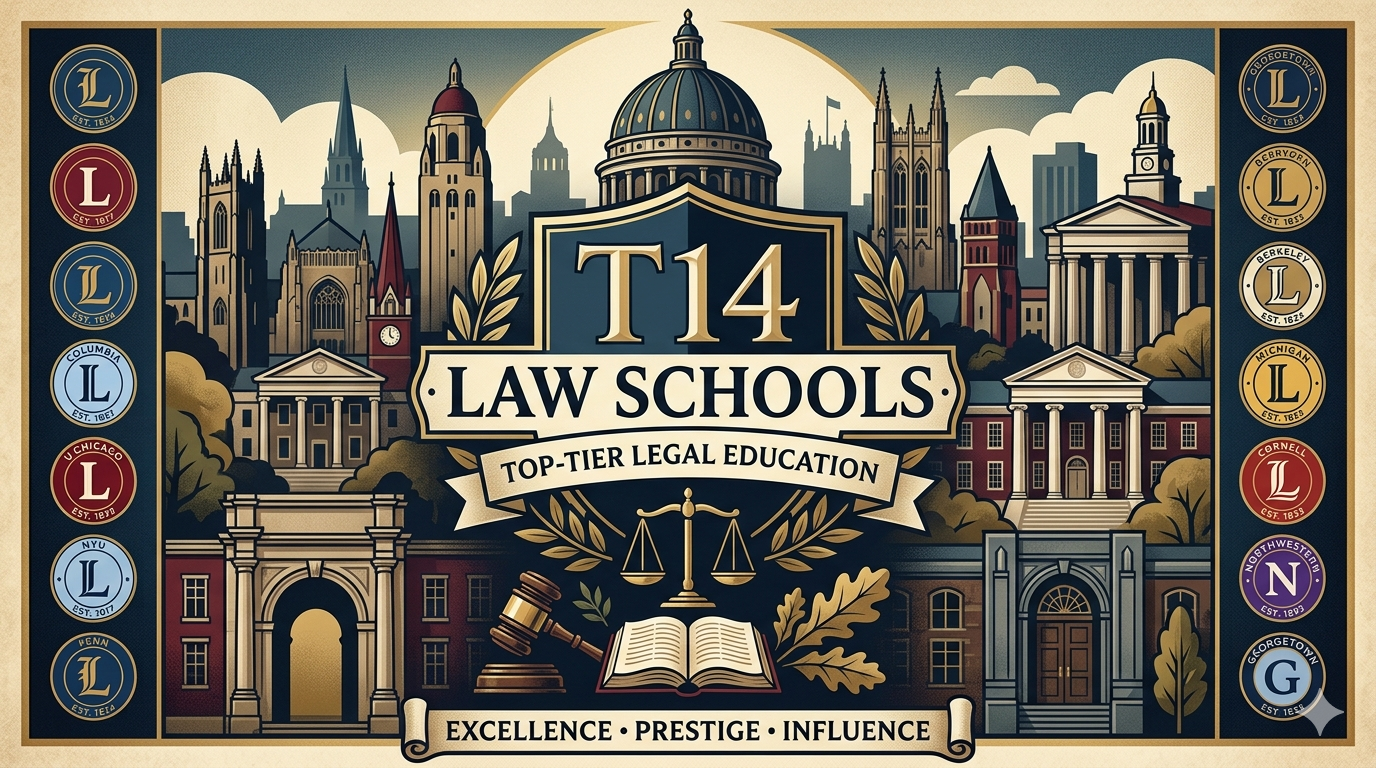
The U.S. News & World Report released its 2026 Best Law Schools rankings on April 7, 2026, marking a significant update for prospective law students targeting the most competitive programs. For decades, the informal designation of “t14 law schools” has identified the 14 institutions that consistently occupy the top spots in these rankings and deliver exceptional national placement outcomes in BigLaw firms and federal clerkships. This year’s rankings introduce notable shifts, including Stanford Law School claiming the sole top position and traditional t14 law schools such as the University of California, Berkeley School of Law and Georgetown University Law Center falling outside the top 14.
These changes arrive at a critical time for the 2026-2027 admissions cycle. Applicants must understand not only current standings but also how rankings intersect with American Bar Association (ABA) accreditation standards, employment outcomes, and bar passage rates. This guide explains the latest developments, the enduring significance of t14 law schools, and practical admissions considerations for those pursuing a legal career.
Background & Legal Context
U.S. News & World Report began publishing annual law school rankings in the 1980s as a resource to help prospective students evaluate programs. Over time, the “t14 law schools” label emerged as shorthand for the small group of institutions that reliably filled the top 14 positions. The traditional t14 list historically included Yale Law School, Stanford Law School, Harvard Law School, Columbia Law School, New York University School of Law, University of Chicago Law School, University of Pennsylvania Carey Law School, University of Virginia School of Law, University of Michigan Law School, Duke University School of Law, Northwestern Pritzker School of Law, Cornell Law School, University of California, Berkeley School of Law, and Georgetown University Law Center.
All ABA-accredited law schools must meet standards set by the American Bar Association’s Council of the Section of Legal Education and Admissions to the Bar. These include requirements under Standard 301 for educational outcomes, Standard 316 for bar passage, and detailed reporting on employment under Standard 509. Rankings like those from U.S. News incorporate data on these metrics, along with peer and judge assessments of academic reputation. In 2022 and 2023, several top schools, including most of the traditional t14, declined to submit certain data to U.S. News in protest of the methodology. The publication responded by revising its formula to place greater weight on employment outcomes at graduation and ten months after graduation, bar passage rates, and other objective measures while reducing reliance on self-reported data.
Understanding US News Rankings Methodology
U.S. News evaluates law schools on several weighted factors that align closely with the regulatory emphasis placed by the ABA on graduate success. Key components include:
- Employment outcomes and bar passage rates (approximately 58 percent combined weight in recent iterations).
- Peer assessment scores from law school deans, faculty, and judges (25 percent).
- Selectivity indicators such as median LSAT scores, undergraduate GPAs, and acceptance rates (10 percent).
- Faculty resources, library resources, and other inputs (remaining share).
The methodology does not constitute an official regulatory judgment by the ABA or any state bar authority. Instead, it serves as one tool among many for assessing program quality. Outcomes data reported to the ABA directly influence both accreditation status and rankings, underscoring the connection between institutional performance and the legal profession’s standards for competent practice.
Latest Developments in 2026 Rankings
The 2026 rankings reflect the continued evolution of the post-boycott methodology. Stanford Law School secured the number-one position outright. Yale Law School, which had held the top spot for decades, tied for second with the University of Chicago Law School. Ties continue at the fourth position between the University of Pennsylvania Carey Law School and the University of Virginia School of Law. Harvard Law School placed sixth, followed by a tie at seventh between Duke University School of Law and New York University School of Law. Columbia Law School, Northwestern Pritzker School of Law, and the University of Michigan Law School tied for ninth. Vanderbilt University entered the top tier at twelfth, while Cornell Law School, the University of California, Los Angeles School of Law, and Washington University School of Law (in St. Louis) rounded out the expanded top group with ties at thirteenth.
Notable movements include the University of California, Berkeley School of Law dropping to sixteenth and the Georgetown University Law Center falling to eighteenth, the first time in recent memory that either has sat outside the traditional top 14. These shifts do not reflect declines in absolute quality or ABA compliance but rather recalibrations in how U.S. News weights employment, bar passage, and selectivity data. The informal “t14 law schools” boundary remains meaningful for applicants because these institutions continue to produce the highest rates of national BigLaw placement and federal clerkships regardless of minor rank fluctuations.
Admissions Requirements for t14 Law Schools
Admission to t14 law schools remains highly selective. Median LSAT scores for the most recent entering classes at these institutions typically range from 171 to 174, with undergraduate GPAs centered around 3.90 to 3.97. Acceptance rates generally fall between 5 and 15 percent, though each school conducts a holistic review that considers letters of recommendation, personal statements, work experience, and diversity factors.
The Law School Admission Council (LSAC) administers the LSAT and the Credential Assembly Service (CAS), which compiles transcripts and letters for all ABA-accredited schools. Most t14 law schools continue to require the LSAT, though some have adopted test-optional policies for the GRE or JD-Next in limited circumstances. Early decision or early action binding programs are available at several institutions and can improve admission odds for strong candidates who demonstrate clear preference.
Applicants should also review each school’s ABA 509 report, which discloses detailed employment outcomes, bar passage rates, and tuition data. These reports provide transparent, regulator-mandated information that complements rankings.
Who Is Affected & Potential Impact
Prospective law students aiming for high-prestige careers in large law firms, federal or state appellate clerkships, or public interest organizations with national reach are most directly affected. Graduates of t14 law schools historically secure BigLaw positions at rates of 50 to 80 percent or higher within ten months of graduation and dominate federal clerkship selections. Employers, including Am Law 100 firms and federal judges, continue to use the t14 designation as a shorthand for rigorous training that meets or exceeds ABA standards for professional competence.
Law schools themselves face pressure to maintain strong employment and bar passage outcomes to preserve accreditation and competitive standing. The broader legal profession benefits from the pipeline of highly qualified graduates, though critics note that over-reliance on rankings may undervalue schools with strong regional placement or public service missions.
What This Means Going Forward
The 2026 rankings underscore that the t14 law schools label is an informal but durable indicator of elite legal education rather than a rigid list. Minor rank changes do not alter the core value these institutions provide in terms of career outcomes. Applicants should monitor ABA-mandated employment data released each spring and consider how each school’s strengths align with their specific goals, whether in corporate law, public interest, or academia.
Prospective students are encouraged to review the most recent U.S. News rankings alongside individual school 509 reports and LSAC data. The admissions process rewards early preparation, strong standardized test performance, and compelling narratives that demonstrate readiness for the demands of legal practice.
Frequently Asked Questions
What does “t14 law schools” mean in 2026?
The term refers to the small group of law schools that have historically occupied the top 14 positions in U.S. News rankings and continue to offer the strongest national employment outcomes. While exact membership can shift slightly due to ties and methodology changes, the group remains a recognized benchmark for elite legal education.
How much do the 2026 rankings matter for the 2026-2027 admissions cycle?
Rankings provide useful context but are not the sole factor. Employers and bar examiners focus on ABA-accredited status, bar passage rates, and actual employment records rather than annual rank fluctuations.
Do all t14 law schools require the LSAT?
Most continue to accept or require the LSAT. A small number permit the GRE or other tests under limited conditions. Check each school’s current policy on its admissions website or through LSAC.
What LSAT and GPA should I aim for to be competitive at t14 law schools?
Medians typically range from 171-174 on the LSAT and 3.90-3.97 GPA, but holistic review means exceptional experience or background can offset numbers slightly below medians.
How do bar passage rates factor into rankings and accreditation?
The ABA requires schools to meet specific bar passage thresholds for continued accreditation. U.S. News incorporates first-time and ultimate bar passage rates into its scoring, making them a key differentiator.
Should I apply early decision to a t14 law school?
Early decision programs can increase admission chances for committed applicants but are binding. Weigh this against the ability to compare financial aid offers from multiple schools.
Conclusion
The 2026 U.S. News law school rankings confirm that t14 law schools remain the gold standard for many applicants seeking national career opportunities in the legal profession. While Stanford’s rise to sole first place and the movement of Berkeley and Georgetown illustrate ongoing methodological adjustments, the fundamental advantages of attending these institutions, strong alignment with ABA standards, superior employment outcomes, and access to influential networks, endure. Prospective students should treat rankings as one data point within a broader evaluation that includes ABA 509 reports, personal fit, and long-term career objectives. Staying informed through official sources from the American Bar Association, LSAC, and individual law schools will support sound decision-making throughout the 2026-2027 admissions cycle.
You may also like: Home Depot Accessibility Claims 2026: Settlement & Lawsuit Updates