
 By Rightful Advice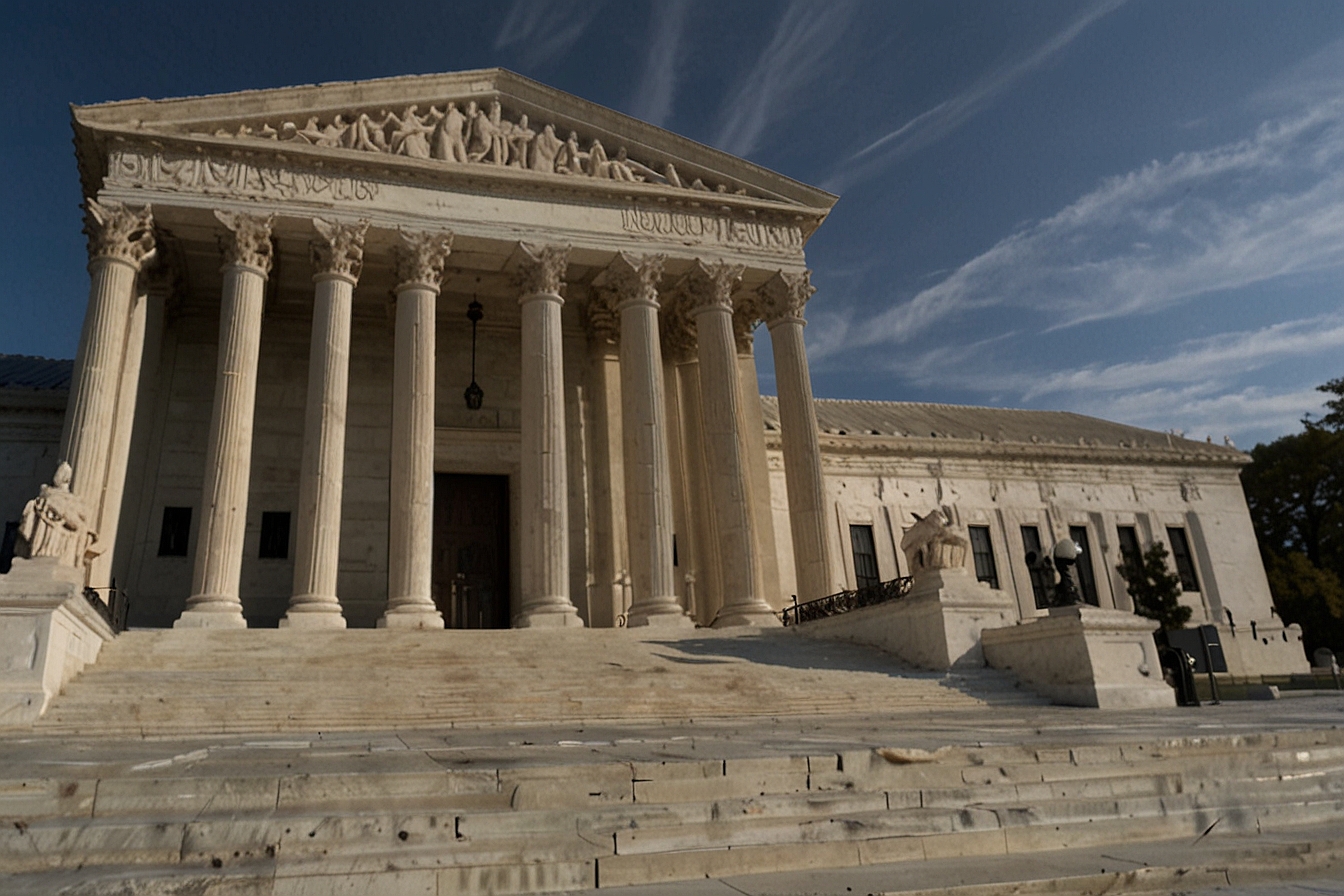
The U.S. Supreme Court has released several notable opinions in recent weeks as part of its October 2025 Term, addressing issues ranging from free speech protections and immigration appeals to sovereign immunity and parental rights. These developments represent the latest Supreme Court news that directly affects constitutional rights, federal agency procedures, and state-level policies.
As of March 22, 2026, the rulings clarify longstanding legal standards and resolve disputes with immediate real-world consequences for individuals, families, businesses, and government entities. For example, decisions on asylum reviews and school notifications influence how laws are applied in daily life, while upcoming arguments on migrant protections signal potential shifts in immigration policy.
This article provides a factual overview of the key cases, their legal context, and implications, drawing from the Court’s official releases and established precedents. It answers what happened, who is affected, and why these Supreme Court rulings matter now. This article is for informational purposes only and does not constitute legal advice.
Background & Legal Context
The Supreme Court of the United States serves as the final interpreter of the U.S. Constitution and federal law under Article III. Established in 1789, the Court consists of nine justices appointed for life by the President and confirmed by the Senate. It primarily reviews cases via writ of certiorari, granting review to resolve circuit splits or significant national issues.
The current October 2025 Term runs from October 2025 through October 2026. The Court typically hears oral arguments from October through April and releases opinions from November through June or July. Opinions may be full signed decisions, per curiam (unsigned) rulings on emergency applications, or orders. Procedures follow strict rules: briefs, amicus curiae submissions from interested parties, and public oral arguments (now often livestreamed).
Recent rulings build on established frameworks. For instance, the Court frequently addresses the Administrative Procedure Act in agency cases, qualified immunity and § 1983 civil rights claims in constitutional disputes, and the 11th Amendment in sovereign immunity matters. These Supreme Court cases often arise from lower federal court decisions or state appeals, reflecting the layered U.S. judicial system where district courts handle trials, circuit courts review appeals, and the Supreme Court provides final clarity.
Key Legal Issues Explained
Several core legal principles are at play in the latest rulings.
In free speech and civil rights contexts, the Court examined whether a prior criminal conviction under Heck v. Humphrey (1994) bars a plaintiff from seeking prospective injunctive relief against future enforcement of an ordinance. Heck generally prevents § 1983 claims that would imply the invalidity of a conviction, but exceptions exist for forward-looking relief that does not challenge the conviction itself.
Immigration law disputes center on the standard of review for Board of Immigration Appeals (BIA) decisions under the Immigration and Nationality Act (INA). The “substantial evidence” standard drawn from the Administrative Procedure Act requires courts to uphold agency findings if supported by “more than a mere scintilla” of evidence, a deferential but not toothless review. This differs from de novo review, which allows courts greater independence.
Sovereign immunity questions turn on whether an entity qualifies as an “arm of the state” entitled to 11th Amendment protection from suits in federal or sister-state courts. Factors include state law treatment, funding sources, and operational control.
Parental rights cases invoke substantive due process under the 14th Amendment, recognizing fundamental rights of parents to direct their children’s upbringing, often weighed against state interests in child welfare or student privacy.
These concepts illustrate how the Court applies constitutional text, statutory language, and precedent to real disputes without creating new rights or policies.
Latest Developments or Case Status
The Supreme Court issued opinions on March 20, 2026, and earlier in the month.
In Olivier v. City of Brandon (24-993), decided unanimously on March 20, the Court held that a petitioner’s suit seeking purely prospective relief an injunction against future enforcement of a local ordinance, can proceed despite a prior conviction for violating that ordinance. Heck v. Humphrey does not bar such claims. This unanimous ruling allows the street preacher’s free speech challenge to advance.
On March 4, 2026, the Court decided Urias-Orellana v. Bondi (24-777) unanimously, ruling that the INA requires federal appellate courts to apply the substantial-evidence standard when reviewing the BIA’s determination of whether undisputed facts constitute persecution. The decision shifts more responsibility to immigration judges amid heavy caseloads.
The same day, in Galette v. New Jersey Transit Corp. (24-1021), the Court held that the New Jersey Transit Corporation is not an arm of the state and therefore not entitled to New Jersey’s interstate sovereign immunity.
In a per curiam order on March 2, 2026 (Mirabelli v. Bonta, 25A810), the Court granted an emergency application, vacating a Ninth Circuit stay and allowing California schools to notify parents about students’ gender identity or transitioning efforts without student consent, applying the four-factor stay test from Alabama Assn. of Realtors v. Department of Health and Human Services.
Additional developments include the Court’s announcement of opinions on March 20 and ongoing order lists. Chief Justice John Roberts recently commented that personal hostility toward judges “is dangerous and it’s got to stop.” The Court has also scheduled April arguments on the Trump administration’s effort to terminate Temporary Protected Status (TPS) for Haitian and Syrian migrants. Other pending matters involve ballot receipt deadlines (Watson v. Republican National Committee), bankruptcy asset omissions, and arbitration exemptions for certain drivers.
Live updates are available through the Court’s website for opinion announcements and order lists.
Who Is Affected & Potential Impact
These Supreme Court rulings and pending cases touch multiple groups:
• Asylum seekers and immigrants face stricter appellate review under Urias-Orellana v. Bondi, potentially reducing successful challenges to denials and increasing pressure on already overburdened immigration courts and the Department of Justice. TPS holders from Haiti and Syria await arguments that could end their legal protections.
1. Parents and families in California benefit from the Mirabelli order, which clears the way for schools to share transgender-related information without student approval, balancing parental rights against student privacy claims.
2. Public speakers and civil rights plaintiffs, such as the street preacher in Olivier, gain clearer paths to challenge ordinances prospectively without Heck barriers, strengthening First Amendment enforcement.
3. State and local transit authorities and similar public entities must now navigate lawsuits without automatic interstate sovereign immunity, as clarified in the New Jersey Transit case. This affects interstate operations and liability exposure.
4. Debtors in bankruptcy and election officials could see changes if pending cases on asset omissions or ballot deadlines are resolved in favor of stricter or more flexible standards.
Businesses, schools, and government agencies may adjust policies or face new litigation. Outcomes could lead to settlements, legislative responses, or further appeals in lower courts.
What This Means Going Forward
These decisions reinforce core legal standards while leaving room for continued litigation. The unanimous rulings signal broad agreement on procedural clarity in immigration and free speech contexts, potentially reducing circuit splits and providing guidance to lower courts, agencies, and practitioners. The parental rights intervention highlights the Court’s willingness to act on emergency applications involving fundamental rights.
Broader impacts include greater predictability in agency reviews, adjusted risk assessments for public entities, and ongoing national debate over immigration enforcement and family-school dynamics. Industries such as transportation, education, and immigration services should review compliance with the clarified standards.
Readers should monitor the Supreme Court’s opinion announcements through June 2026, upcoming oral arguments, and any emergency applications. The term’s remaining docket may address additional high-profile issues. For real-time tracking, consult official Court resources or established legal analysis sites.
Frequently Asked Questions
What was the ruling in Olivier v. City of Brandon?
The Supreme Court unanimously held on March 20, 2026, that a prior conviction does not bar a plaintiff from seeking prospective injunctive relief against future ordinance enforcement under Heck v. Humphrey. This allows the free speech lawsuit to proceed.
How does the Urias-Orellana v. Bondi decision affect asylum seekers?
The March 4, 2026, unanimous ruling mandates the substantial-evidence standard for BIA persecution determinations. Appellate courts must defer more to agency findings, which may make it harder for migrants to overturn asylum denials and place greater responsibility on immigration judges.
What does the Galette v. New Jersey Transit Corp. ruling mean for sovereign immunity?
The Court determined that New Jersey Transit is not an arm of the state and cannot claim interstate sovereign immunity. This exposes similar public entities to suits in other jurisdictions.
Why did the Supreme Court intervene in the California transgender student notification case?
In the March 2, 2026, per curiam order in Mirabelli v. Bonta, the Court vacated a stay, allowing schools to inform parents about students’ gender identity efforts without consent, applying the traditional four-factor test for emergency relief.
When will the Supreme Court hear arguments on migrant protections for Haitians and Syrians? The Court has scheduled April 2026 arguments on the Trump administration’s bid to end TPS for these groups, following recent filings and denials of related stays.
Where can I find live updates and full opinions for Supreme Court cases?
Official opinions and orders are posted at supremecourt.gov. Independent analysis of arguments and orders is available through specialized legal resources. Check regularly for opinion announcement days.
Conclusion
The latest Supreme Court news underscores the U.S. Supreme Court’s ongoing role in resolving complex legal questions with nationwide reach. Recent rulings on free speech, immigration standards, sovereign immunity, and parental rights provide clarity while highlighting areas for further development.
Affected parties, including immigrants, parents, public speakers, and institutions, should consult qualified legal counsel for advice specific to their situations. Staying informed through official Court channels and reputable legal sources remains essential as the 2025 Term progresses toward its conclusion. For additional context on these or other cases, review the primary Court documents directly.
You may also like: Latest Legal Tech News | 2026 Trends & AI Market Analysis