
 By Rightful Advice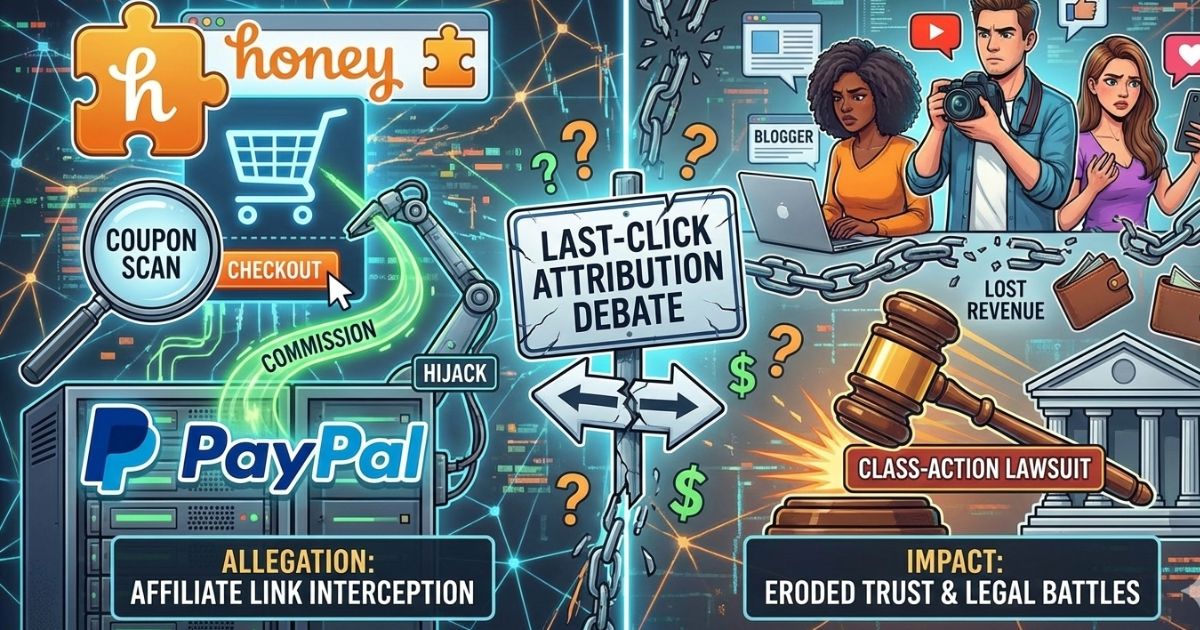
Did you know that in 2025, a consolidated lawsuit involving over 25 cases rocked the affiliate marketing world, pitting content creators against PayPal’s Honey browser extension? This legal battle spotlights how tools meant to save shoppers money might be costing marketers their hard-earned commissions. As an affiliate marketer or influencer, staying ahead of these developments is crucial to protecting your revenue streams.
In this article, we dive into the honey lawsuit, unpacking the dismissal of influencer claims, ongoing data privacy probes, and what it all means for your business. Whether you are an e-commerce professional tracking commission attribution or a privacy-conscious consumer wary of browser extensions, understanding these issues helps navigate the evolving landscape of digital marketing ethics. We will break down complex legal concepts, like tortious interference, into straightforward insights, drawing from court rulings and industry reports to give you a clear picture.
Understanding the Honey Browser Extension
Honey, acquired by PayPal in 2020 for a staggering $4 billion, started as a simple tool to hunt for coupon codes during online shopping. Users install it as a browser extension, and it pops up at checkout, offering to apply discounts automatically. Sounds helpful, right?
But behind the scenes, Honey participates in affiliate marketing. It partners with merchants to earn commissions on sales it refers. This setup relies on tracking cookies, small bits of data that tag who drove a customer to a purchase.
For many users, Honey delivers real savings. Yet, questions arise when its actions overlap with other marketers’ efforts. Imagine promoting a product, only for another tool to claim the credit at the last second. That is where the friction begins.
The Core Allegations Against Honey
At the heart of the honey lawsuit are claims from influencers and content creators. They accuse Honey of tortious interference, a legal term meaning wrongful meddling in business relationships. Specifically, plaintiffs say Honey uses “cookie stuffing” to replace their affiliate links with its own during checkout.
Picture this: You, as an influencer, share a link to a product. A follower clicks it, adds items to their cart, but then Honey activates. Even if no coupon applies, engaging with the pop-up allegedly rewrites the cookie, diverting the commission to PayPal.
This practice, detailed in a 2024 exposé by YouTuber MegaLag, affects commission attribution under the industry’s “last-click” model. Last-click gives credit to the final referral before purchase, often favoring extensions like Honey that intervene late.
Creators argue this steals earnings they deserve for driving initial traffic. One anonymized case study from a tech blogger shows a 30 percent drop in commissions after Honey’s rise, traced to overwritten links on sites like Amazon.
PayPal counters that no theft occurs, as affiliate contracts do not guarantee commissions, and users consent to Honey’s actions upon installation. Still, the allegations highlight broader concerns in affiliate marketing.
Court Proceedings and the Recent Dismissal
The honey lawsuit gained momentum in late 2024, with multiple class actions filed in California federal court. By early 2025, over 25 cases consolidated under “In re PayPal Honey Browser Extension Litigation” (Case No. 5:24-cv-09470-BLF).
Plaintiffs, including YouTubers like Wendover Productions and GamersNexus, sought damages over $5 million for unfair competition, fraud, and unjust enrichment.
In a pivotal ruling on November 21, 2025, U.S. District Judge Beth Labson Freeman dismissed the first amended complaint without prejudice. The judge found plaintiffs lacked standing, failing to prove a concrete injury traceable to Honey.
Why? The complaint relied on a “hypothetical chain of possibilities” for lost commissions, not specific evidence of entitlement under merchant contracts. For instance, affiliate agreements often use last-click rules, which Honey follows by design.
The court also questioned federal claims like computer fraud, noting users authorize Honey’s access. Plaintiffs could not show unauthorized intrusion.
However, the dismissal allows amendment. Plaintiffs have until January 5, 2026, to file a revised complaint with stronger proof of harm, such as detailed transaction data linking Honey to specific lost earnings.
As of January 4, 2026, co-lead counsel from firms like Cohen Milstein and Lieff Cabraser are refining the amendment, incorporating new evidence from ongoing discoveries.
This ruling echoes challenges in similar cases against extensions like Capital One Shopping, where proving direct causation proves tricky.
Ongoing Data Privacy Investigations
Beyond commissions, the honey lawsuit spotlights PayPal Honey data collection practices. Investigations reveal Honey gathers extensive user data, far beyond shopping habits.
For example, it tracks page views, timestamps, locations, and URLs on over 181,000 sites, even without an account. A 2025 Datarequests.org analysis showed Honey could infer personal details like viewing repair guides or checking travel bookings.
MegaLag’s follow-up video in December 2025 accused Honey of capturing private coupons without consent and targeting minors through kid-focused promotions.
Privacy-conscious consumers worry about consumer tracking, as Honey’s policy claims no data sales but allows sharing with affiliates like PayPal. This raises questions under laws like California’s CCPA.
The Better Business Bureau and FTC have probed similar extensions, but no formal charges against Honey yet. Stueve Siegel Hanson and other firms continue investigating, potentially expanding the lawsuit to include privacy violations.
How Honey Impacts Affiliate Commissions
Honey’s model disrupts traditional affiliate marketing. By inserting itself at checkout, it often wins last-click credit, even without adding value like a coupon.
Industry data from PartnerCentric shows Honey has a low “solo close” rate of 0.26 percent, meaning it rarely drives sales alone. Yet, it claims commissions on transactions it joins late.
For e-commerce professionals, this inflates costs: Merchants pay fees without gaining new customers. One report estimates brands lose up to 20 percent of affiliate budgets to such extensions.
Affiliate marketers face reduced earnings. A fashion influencer shared anonymously that after uninstalling Honey from test devices, commissions rose 15 percent.
To counter this, some suggest using tools like Impact.com for better tracking or negotiating stand-down rules, where extensions yield to prior affiliates.
Legal Challenges for Coupon Extensions
Coupon extensions like Honey face mounting scrutiny. Similar lawsuits target Rakuten and Klarna for comparable practices.
In 2025, Google updated Chrome policies, requiring clear disclosures of affiliate ties pre-installation. Microsoft axed its shopping feature amid legal pressure.
These cases test boundaries of digital marketing ethics. Courts weigh user consent against deceptive tactics. For instance, if extensions hide cookie changes, it could violate wiretap laws.
Precedents like the 2010 eBay affiliate fraud case, involving criminal charges for cookie stuffing, suggest potential escalation if intent to deceive is proven.
Legal tech analysts predict more regulations, perhaps mandating multi-touch attribution over last-click to fairly distribute commissions.
Ethical Considerations in Digital Marketing
Is Honey a scam or smart business? The debate rages. On one hand, it saves consumers money; on the other, it may undermine creators’ livelihoods.
Think about a small influencer scraping by on commissions. When a tool like Honey swoops in, it feels unfair. Yet, PayPal argues it’s competitive, with users choosing the extension.
This touches on broader ethics: Should companies prioritize transparency? Honey’s alleged control over displayed coupons, hiding better deals, questions trust.
For social media influencers, partnering with ethical tools is key. Avoid extensions without clear policies.
An attorney quote from a similar case: “Transparency builds lasting relationships in marketing.”
Broader Implications for the Industry
The honey lawsuit signals shifts in affiliate marketing. Brands may rethink partnerships, favoring direct creator ties over extensions.
E-commerce pros should audit tools for compliance. Privacy laws evolve, with potential class action investigations growing.
Tables can clarify trends:
| Year | Key Event | Impact |
|---|---|---|
| 2020 | PayPal acquires Honey | Boosts extension’s reach |
| 2024 | MegaLag exposé | Sparks lawsuits |
| 2025 | Court dismissal | Requires amendment |
| 2026 | Amendment deadline | Potential revival |
Another table on data collection:
| Data Type | Collected by Honey | Privacy Concern |
|---|---|---|
| Browsing URLs | Yes | Tracks non-shopping activity |
| Location | Yes | Infers personal habits |
| Timestamps | Yes | Builds detailed profiles |
These visuals highlight risks.
Conclusion
The honey lawsuit reveals cracks in affiliate marketing, from dismissed influencer claims to probing data practices. While the court found insufficient proof of harm, amendments could revive the case, emphasizing the need for concrete evidence.
Marketers, stay vigilant: Monitor your commissions, review extension policies, and prioritize ethical tools. Consult a legal expert to assess if Honey or similar extensions affect your earnings. Protecting your business starts with knowledge.
You May Also Like: How to Claim GM Class Action Engine Defect Payout