
 By Rightful Advice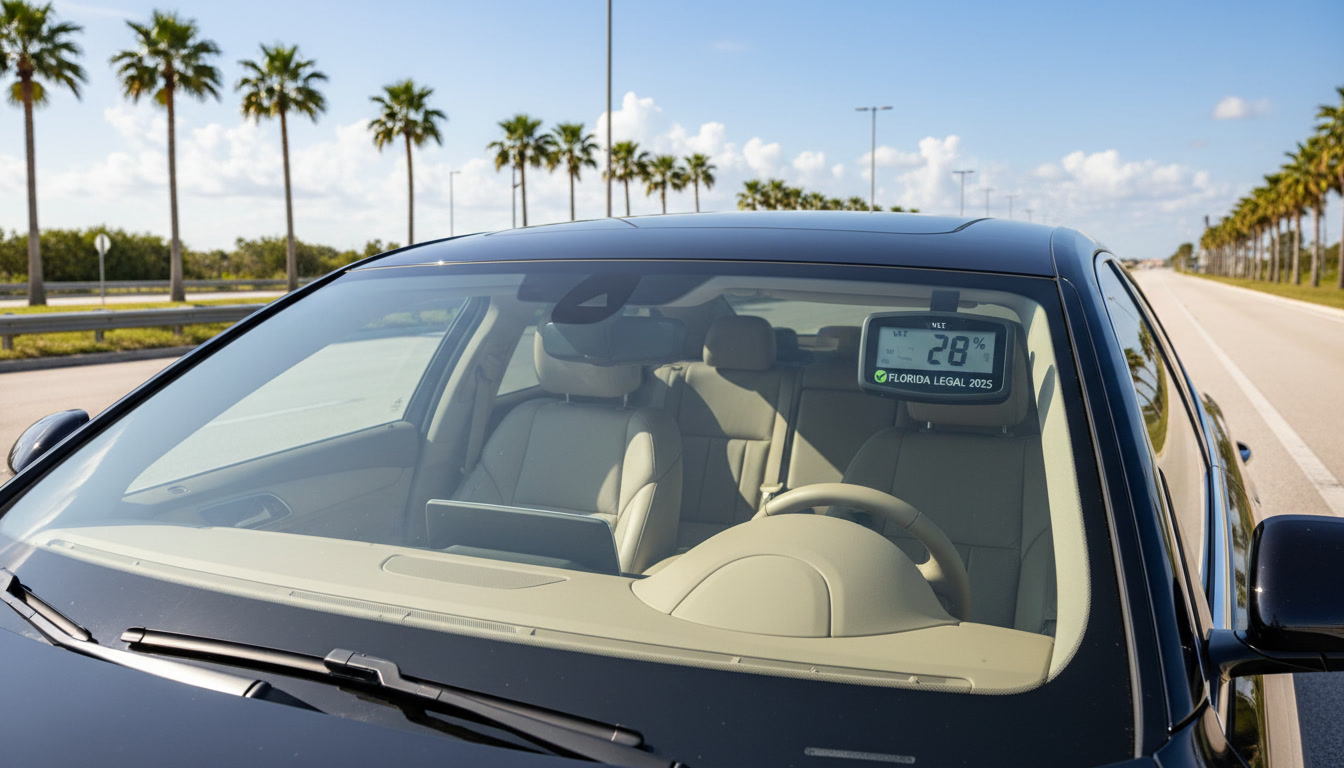
Driving under the Florida sun can feel like a battle against glare and heat. For many vehicle owners, window tint is the first line of defense. However, getting it wrong can lead to expensive tickets and failed inspections. In 2025, Florida law maintains specific Visible Light Transmission (VLT) limits that every driver must know to stay compliant. This definitive guide breaks down the legal tint percentages, medical exemptions, and enforcement rules to help you protect yourself from the sun without attracting law enforcement’s attention.
Why Florida’s Tint Laws Matter More Than You Think
You might think a slightly too-dark tint is a minor infraction. In reality, a non-moving violation for illegal tint can cost you over $100, and it’s a primary offense—meaning an officer can pull you over for the tint alone. More critically, illegal tint can jeopardize your vehicle’s safety inspection status and even affect insurance claims in an accident. Understanding these laws isn’t just about avoiding fines; it’s about ensuring your vehicle is street-legal and safe for you and other drivers on Florida’s bright, busy roads.
The Science Behind Visible Light Transmission (VLT)
At the heart of Florida tint laws is the concept of VLT percentage. This is the amount of visible light that passes through your window film and glass combined. A lower VLT percentage means a darker tint. For example, a 5% VLT is a “limo tint” that allows only 5% of light in, while a 50% VLT is much lighter. Florida statutes define legal limits based on this precise measurement, and law enforcement uses certified meters to enforce it. It’s not an estimate—it’s a scientific measurement you must meet.
2025 Florida Legal Tint Percentages by Vehicle Type
Florida’s rules differ significantly between sedans and multi-purpose vehicles (like SUVs and vans). This is a crucial distinction many owners miss. The following limits represent the darkest legal tint in Florida allowed on each window.
Tint Laws for Passenger Cars (Sedans)
- Front Windshield: Non-reflective tint is allowed only on the top 5 inches, down to the AS-1 line (marked on most windshields). This is often called a “sun visor” strip.
- Front Side Windows (Driver & Passenger): Must allow 28% or more VLT. This is the strictest limit on the car. The combined VLT of the film and the glass must be at least 28%.
- Rear Side Windows: Can have any darkness.
- Rear Window: Can have any darkness, provided the vehicle has dual outside mirrors. If the rear window is tinted, the two side mirrors are legally required for safety.
Tint Laws for Multi-Purpose Vehicles (SUVs, Vans, Trucks)
- Front Windshield: Same rule as sedans: only the top 5 inches down to the AS-1 line.
- Front Side Windows: Must allow 28% or more VLT (identical to sedans).
- Rear Side Windows & Rear Window: Can have any darkness.
Key Takeaway: The main legal difference between a sedan and an SUV in Florida is for the rear side windows. Sedans can have any darkness on the rear sides, but so can SUVs. The 2025 laws are now equal for these vehicle types in this regard, a change from older regulations.
Additional Legal Restrictions: Reflectivity & Colors
VLT isn’t the only rule. Florida also regulates the shine and hue of your tint.
- Window Reflection Limit: Tint must not be more than 25% reflective on any window. This prevents a mirror-like effect that can dazzle other drivers.
- Illegal Tint Colors: Red, amber, and yellow tints are prohibited. These colors are reserved for emergency and law enforcement vehicles. Stick to neutral shades like gray, charcoal, or black to avoid issues.
Navigating Florida’s Medical Exemption for Window Tint
For individuals with specific medical conditions, Florida offers a path to legally install darker tint. The medical exemption certificate is a formal document that allows you to go below the standard 28% VLT on your front side windows.
Who Qualifies for a Medical Exemption?
A licensed physician must certify that you have a condition that necessitates UV protection or reduced light exposure. Common qualifying conditions include:
- Lupus
- Melanoma
- Photophobia (light sensitivity)
- Other autoimmune or dermatological disorders exacerbated by sun exposure.
How to Obtain Your Medical Exemption
- Consult Your Physician: Discuss your condition and the need for tint. The physician must complete a specific statement (found on the Florida Highway Safety and Motor Vehicles website) certifying your medical necessity.
- Keep the Certificate: You do not send this form to the state. You must carry the original signed certificate in your vehicle at all times and present it to law enforcement upon request.
- Get Your Tint Installed: The exemption typically allows tint on the front side windows that permits at least 15% VLT (darker than the standard 28%). The exact permitted darkness should be noted by your physician.
Caution: This exemption applies only to the front side windows. All other rules (windshield strip, reflectivity, color) still apply. Also, the certificate is non-transferable between vehicles or owners.
The Real-World Consequences of Illegal Tint
Choosing to ignore Florida tint laws comes with tangible risks that go beyond a simple fix-it ticket.
Fines and Enforcement
A window tint violation fine in Florida is typically issued as a non-moving violation. While the base fine might start around $114, costs can escalate with court fees and the required correction. You will be given a certain number of days to remove the illegal tint and provide proof of correction to the court. Failure to do so can lead to additional penalties.
Safety and Liability Concerns
Excessively dark tint can severely reduce nighttime visibility, increasing your risk of an accident. In the event of a crash, an insurance company could potentially dispute a claim if your vehicle was modified outside legal specifications. Furthermore, dark tint can hinder law enforcement’s ability to see inside a vehicle during a traffic stop, which can raise safety concerns for officers.
How to Ensure Your Tint is 100% Legal
- Choose a Reputable Installer: Professional installers know the laws and use certified, quality film. Ask them to provide a certificate or documentation stating the VLT percentage of the film they are installing.
- Get it Measured: If in doubt, have a professional use a VLT meter on your windows after installation. This gives you peace of mind and proof of compliance.
- Factor in Factory Glass: Remember, the law measures the combined VLT of film + glass. Most factory glass has a slight tint (often around 80% VLT). If you add a 35% VLT film over an 80% VLT glass, your final VLT is roughly 28% (0.35 x 0.80 = 0.28). A good installer will calculate this for you.
Frequently Asked Questions (FAQs)
- Can I have tint on my entire front windshield? No. Only a non-reflective strip above the manufacturer’s AS-1 line is permitted.
- Do I need a note from my doctor for legal tint? Only if you are applying for a medical exemption to have front side windows darker than 28% VLT. For standard legal tint, no note is needed.
- How is tint enforced? Through visual inspection and handheld VLT meters during traffic stops or at vehicle inspection checkpoints.
- Are ceramic tints legal? Yes, as long as they meet the VLT, reflectivity, and color requirements. Ceramic tint is excellent for heat rejection without adding darkness.
Final Recommendations for Florida Drivers
Staying compliant with Florida tint laws requires knowing the 2025 VLT limits: 28% for front side windows on all vehicles, with specific rules for reflectivity and color. If you have a medical need, secure your medical exemption certificate properly and keep it in your car. Always use a professional installer who guarantees their work meets state code.
Protecting yourself from UV rays and reducing sun glare is a smart move in the Sunshine State—just make sure you do it within the bounds of the law. Before you get your windows tinted, consult with a licensed and knowledgeable window tint professional who can provide the latest guidance and ensure your vehicle passes muster, keeping you cool, protected, and ticket-free.
You May Also Like: The Law of Assumption: A Practical Guide to Conscious Creation