
 By Rightful Advice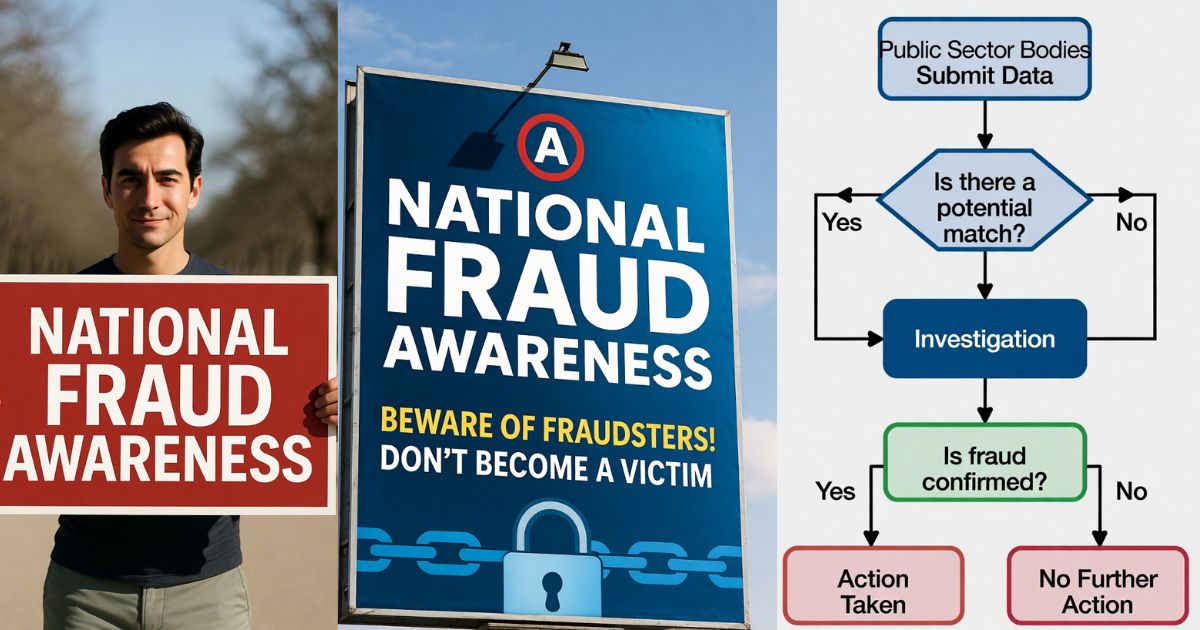
Every year, fraud and error drain billions of pounds from vital public services. But what if the key to stopping it was already in the data you hold? The National Fraud Initiative (NFI) is the UK’s most powerful counter-fraud tool, using sophisticated data matching to protect taxpayer money. This guide breaks down exactly how the NFI works, its legal foundations, and what every public sector worker needs to know about their role in this critical, collaborative effort.
What Is the National Fraud Initiative (NFI)?
The National Fraud Initiative is a mandatory, bi-annual data matching exercise led by the Cabinet Office. At its core, it’s a proactive prevention program. It works by comparing datasets from thousands of public sector organisations to spot inconsistencies and anomalies that could indicate fraud or error.
Think of it as a massive, secure cross-check. By law, bodies like local authorities, NHS trusts, and government departments submit specific datasets. These are then electronically compared by the NFI’s delivery partner, Synectics Solutions. The process flags potential matches for investigation, such as an individual incorrectly receiving a council tax single person discount while being listed as married on another official register, or a deceased person still receiving pension payments.
The results speak for themselves: since its inception, the NFI has detected and prevented over £2 billion in fraud and error. It’s not about accusing individuals but about ensuring integrity in the system, making every pound of public money work as hard as possible.
The Legal Backbone: Digital Economy Act 2017
The authority for this large-scale data sharing doesn’t come from a gentle agreement; it’s firmly rooted in law. The Digital Economy Act 2017 provides the statutory gateway that allows public authorities to share data for the specific purpose of combating fraud against the public sector.
This is crucial for compliance officers to understand. The Act:
- Provides a legal mandate for participation for specified bodies.
- Sets clear boundaries on what data can be shared and for what purpose.
- Requires all participating organisations to publish a National Fraud Initiative privacy notice. This notice must transparently inform citizens that their data may be used in this exercise, detailing the purpose and legal basis.
This legal framework ensures the NFI operates with both power and proportionality, balancing effective fraud prevention with strict adherence to data protection principles. It moves data sharing from a “can we?” question to a “how do we do it securely and correctly?” procedure.
The Role of the Public Sector Fraud Authority
Overseeing the NFI is the Public Sector Fraud Authority (PSFA), launched in 2022 within the Cabinet Office. The PSFA represents a heightened focus on fraud, bringing together expertise, data, and tools to lead the government’s fight. The NFI is a cornerstone of the PSFA’s capability, providing the empirical data that drives targeted action and policy.
How Does the National Fraud Initiative Data Matching Actually Work?
Let’s demystify the process. It’s a cycle of collaboration, technology, and local action.
Step 1: Data Submission & Standardisation
Every two years, your organisation will prepare and submit required datasets such as payroll, pensions, housing tenancies, or concessionary travel lists to the secure NFI portal. The NFI team provides clear templates and validation rules to ensure consistency and quality across all submissions.
Step 2: The Matching Engine & Anomaly Detection
This is where Synectics Solutions applies its matching algorithms. The system doesn’t make accusations; it identifies potentially suspicious matches across different datasets. For example:
- A payroll record from an NHS Trust is matched against a pension payroll record from a local authority, flagging a potential pension fraud if dates and details conflict.
- A housing benefit claimant’s declared address is matched against other resident data, suggesting a possible undisclosed partner.
Step 3: Results Distribution & Local Investigation
Your organisation receives its own tailored set of match results, essentially, leads to investigate. The NFI does not determine fraud; that responsibility stays with you. Your internal audit and compliance or fraud team will follow your own procedures to investigate each match. Many turn out to be explainable errors, but others uncover genuine fraud or overpayments.
Step 4: Reporting & Continuous Improvement
Organisations report back their investigation outcomes (e.g., “fraud confirmed,” “error corrected,” “no case to answer”). These aggregated National Fraud Initiative data matching results are published, demonstrating the program’s value and helping to refine future exercises. This feedback loop is vital for risk management across the entire public sector.
What This Means for Key Sectors: Local Government and the NHS
The national fraud initiative for local government is particularly impactful. Councils are responsible for a vast array of services and allowances, making them a significant target for fraud. Key areas where the NFI delivers value include:
- Council Tax: Identifying incorrect Single Person Discounts.
- Housing: Uncovering Right-to-Buy fraud and tenancy cheats.
- Blue Badges: Detecting misuse of disabled parking permits.
- Procurement: Highlighting potential conflicts of interest with supplier lists.
Similarly, the impact of the National Fraud Initiative on the NHS is profound in a resource-strapped system. It helps protect funds by identifying:
- Payroll fraud, such as ghost employees or overtime abuse.
- Fraudulent patient registration for primary care services.
- Inaccurate pension payments.
- Procurement and invoice fraud within trusts.
Addressing the Elephant in the Room: Data Privacy and Protection
Any discussion about mass data sharing must confront privacy concerns head-on. The NFI is designed with data protection at its heart, operating under what’s known as a “privacy by design” principle.
- Lawful Basis: The Digital Economy Act 2017 provides the specific lawful basis for processing.
- Data Minimisation: Only the data fields necessary for matching (like name, date of birth, address, NI number) are submitted.
- Security: Data is transferred and stored using the highest levels of encryption and security protocols.
- Transparency: The mandatory privacy notice ensures public awareness.
- Accountability: A formal Data Protection Impact Assessment (DPIA) is conducted for the exercise, evaluating and mitigating risks to individual privacy.
For data officers, participation is not a GDPR hurdle but a defined process that, when followed correctly, fulfills both your legal duty to prevent fraud and your obligations under data protection law.
Your Action Plan: Compliance and Best Practices
If you’re in a role responsible for NFI public body requirements, here’s a concise action plan:
- Know Your Obligations: Confirm your organisation is a specified body under the Digital Economy Act. The Cabinet Office issues clear guidance and instructions for each exercise.
- Prepare Your Data: Start early. Cleanse and prepare the required datasets according to NFI specifications. Good quality data in means higher quality matches out.
- Communicate Transparently: Ensure your public-facing National Fraud Initiative privacy notice is up-to-date and accessible.
- Investigate Diligently: When results arrive, have a robust process for timely investigation. This is where the NFI’s value is realised locally.
- Report Accurately: Feed outcomes back to the NFI. This data is essential for measuring success and improving the system.
- Embrace the Culture: Use the NFI as part of a broader proactive fraud prevention and risk management strategy.
Reporting Fraud to the NFI
While the NFI primarily works through data matching, if you have specific intelligence on public sector fraud, you can report it directly through the government’s reporting channels. The intelligence can help inform future data matching exercises and targeted actions by the Public Sector Fraud Authority.
A Vital Tool for a Critical Mission
The National Fraud Initiative represents a smart, collaborative approach to a persistent problem. It leverages the data the public sector already holds to create a powerful defense against financial loss. For finance officers, compliance teams, and administrators, understanding the NFI is key to participating effectively and confidently. It’s a process built on legal certainty, technological sophistication, and ethical data use all in service of one goal: ensuring every possible pound is directed towards hospitals, schools, roads, and care, not into the pockets of fraudsters.
By fulfilling your role in the NFI cycle, you are directly contributing to the integrity and sustainability of the public services we all rely on.
You May Also Like: Edward Jones Kingsview Advisors Lawsuit Insights